
Neck & Upper Back Pain in Desk Workers: Fix It for Good

Eight hours at a desk doesn’t sound like much of a threat. Yet week after week, that same position—chin poking forward, shoulders creeping up toward your ears, screen sitting a little too high or too low—slowly wears down the muscles and joints in your neck and upper back. If you’ve been hunting for neck pain physiotherapy in Delhi, you already know the feeling: that stiff, nagging ache that shows up around 3 p.m. and refuses to leave. Here’s the thing most people miss—by the time it hurts enough to bother you, the problem’s usually been brewing for months. The good news? It’s very fixable. Let’s talk about what’s actually going on, and what a decent physio can do about it. Why Desk Workers Keep Ending Up With Neck Pain Your head weighs roughly 10 to 12 pounds when it sits neutrally over your spine. Tip it forward just 30 degrees—which, let’s be honest, is where most of us live while staring at a laptop—and the load on your neck jumps to around 40 pounds. Do that all day, every day, and the small muscles running up the back of your skull start to complain. Loudly. A good physiotherapist won’t just tell you to “sit up straight.” They’ll figure out which muscles are working overtime, which ones have quietly checked out, and where your joints have stopped moving the way they should. From there, it’s usually a mix of hands-on work and specific exercises that teach your neck to move properly again—not the throwaway stretches you hold for ten seconds and forget. That Ache Between Your Shoulder Blades Upper back pain in desk workers almost always traces back to one of three culprits: muscles stuck holding tension from sitting still too long, stiff joints in the mid-back, or pain that’s actually referred up from the neck. Sometimes you get lucky and it’s all three at once. This is where back pain physiotherapy in Delhi earns its keep. Treating a tight, overworked muscle looks nothing like treating a joint that won’t budge—so guessing rarely helps. You know the symptoms: that dull throb between the shoulder blades, morning stiffness, and the maddening urge to crack your back that never quite delivers relief. If any of that rings a bell, don’t wait it out. It tends to get more stubborn the longer it sits. What Actually Happens at Your First Visit Walk into a proper physiotherapy clinic in Delhi and you’ll notice the first appointment covers a lot more than the sore spot. A good assessment looks at your posture, how far you can move, how strong certain muscles are, and how your body moves overall. Expect questions too—about your desk setup, your daily routine, how long this has been going on. Why the deep dive? Because upper back pain is sneaky. Tight hips from sitting, a lazy core, a monitor parked six inches too low—any of these can be the real driver. Chasing the pain alone gives you a few good days. Finding the actual cause is what keeps it gone. Strategies That Genuinely Move the Needle Here’s roughly what physiotherapy treatment in Delhi tends to involve for desk-related pain, though the exact mix depends on you. Manual therapy comes first for a lot of people—hands-on joint mobilization and soft tissue work to get things moving and dial down the pain. When knots refuse to release, dry needling or trigger point work can reach what stretching can’t. Then comes the retraining, which is really the point of the whole thing. Postural work teaches your body to hold itself well through better muscle activation rather than sheer willpower. Strengthening targets the neglected players—deep neck flexors, the stabilizers in your mid-back, the muscles around your shoulder blades. And yes, someone will probably nudge you to raise that monitor or adjust your chair, because small ergonomic tweaks add up over a working week. No single trick fixes everything, and anyone who promises that is overselling. Real physio is a process. Sessions build on each other, and the home program you’re given between visits is what keeps the momentum going. Where to Start Desk-related neck and upper back pain almost never sorts itself out—not while the habits causing it are baked into your Monday-to-Friday. The earlier you deal with it, the less effort it takes to turn around. Wait too long and you’re untangling months of adaptation. If you’re in Delhi NCR and want structured, experienced care, the team at Physiotherapist in Gurgaon offers both clinic and home-based sessions built around your condition and your schedule. Book an assessment, find out what’s really driving your pain, and get a clear plan to fix it for good.
Post-Surgery Physiotherapy in Delhi: What to Expect in the First 6 Weeks
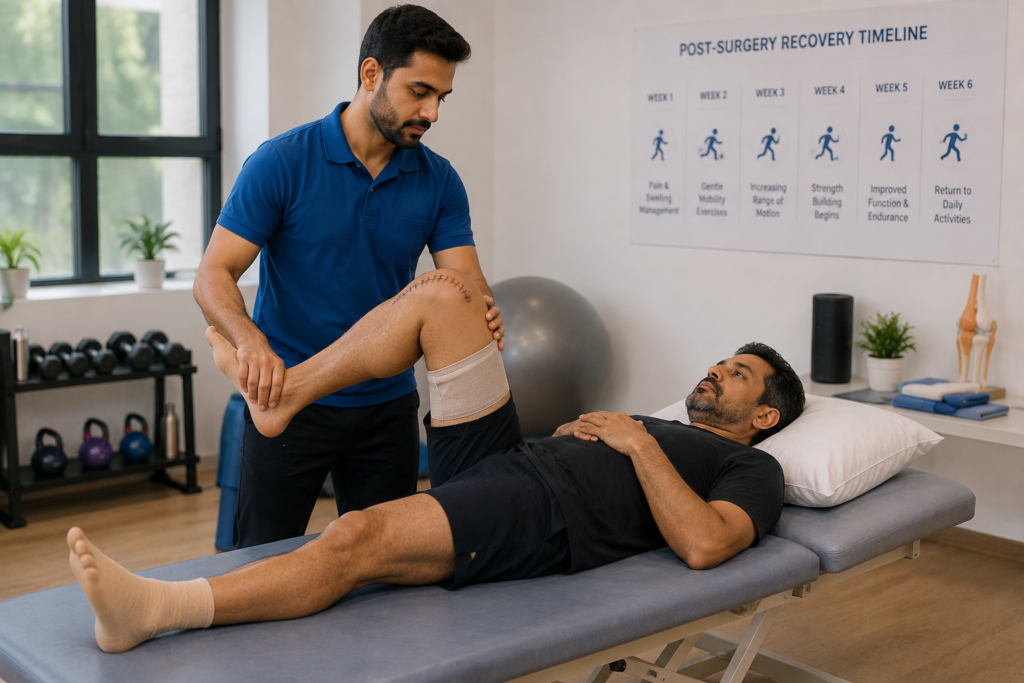
Surgery is the part everyone dreads. But honestly? The weeks after are where the real work happens. The slow mornings where just getting out of bed feels like an achievement. The frustration of not being able to do things you never had to think about before. That’s the part nobody warns you about. If you’re recovering in the capital, finding good post-surgery physiotherapy in Delhi isn’t just helpful — it’s what actually gets you back on your feet. Here’s a straightforward look at what those first six weeks tend to look like, and what you should keep in mind along the way. The First Two Weeks: Slow and Steady Right after surgery, your body is in protection mode. Your physiotherapist isn’t going to push you hard at this stage — and they shouldn’t. The goal is simple: keep things from stiffening up while the surgical site starts to heal. Expect gentle movements, some breathing work, and techniques to bring the swelling down. It might feel like not much is happening, but these early sessions lay the foundation for everything that comes later. Don’t rush this phase. Seriously. Weeks Three and Four: Things Start Moving This is where sessions start to feel more like actual rehab. You’ll begin working on light strengthening, balance, and — depending on what surgery you had — possibly putting some weight through the area for the first time. There’s a real line to walk here. Too much, too soon, and you risk undoing the repair. Too little, and your muscles start to waste away. A good physiotherapist reads your body and knows when to push and when to ease off. That judgment is what you’re paying for. Weeks Five and Six: Getting Back to Real Life By this point, the focus shifts to function. Can you walk up the stairs without holding on? Carry the groceries? Move through your morning routine without stopping to manage pain? These become the benchmarks. Your physiotherapist should also be preparing you for independence — putting together a home exercise program so you keep making progress even after formal sessions wrap up. A good discharge plan is part of good care. How to Choose the Right Physiotherapy Treatment in Delhi Not all clinics are equal. When looking for physiotherapy treatment in Delhi, it’s worth taking the time to find a provider who actually specializes in post-surgical rehab — not just someone who handles general aches and pains. A few things worth asking upfront: Most people need two to three sessions a week in the early stages. That usually eases off as recovery progresses. Why Home Physiotherapy Services in Delhi Might Be the Right Call Here’s the thing — getting to a clinic multiple times a week sounds doable until you’ve just had surgery and every car ride is an ordeal. Home physiotherapy services in Delhi take that problem off the table. But there’s more to it than just saving yourself a trip. When your physiotherapist comes to you, they see your actual home. They can spot hazards, adapt exercises to your real space, and give you advice that fits your life — not a generic clinic environment. For older patients or those recovering from hip and knee surgeries, that kind of tailored input can make a meaningful difference. Before you book, check that the therapist is properly registered, experienced with your type of surgery, and brings their own equipment. When it comes to home physiotherapy services in Delhi, those basics matter. What to Look for in the Best Physiotherapy in Delhi Finding the best physiotherapy in Delhi comes down to more than credentials and location. Yes, look for therapists registered with the Indian Association of Physiotherapists (IAP) or those with postgraduate training in orthopedic or neurological rehab. But also pay attention to how they communicate. Do they explain what’s happening in your body? Do they set honest expectations? Do they adjust when something isn’t working? And importantly — will you see the same person each visit, or a different face every time? Continuity matters more than most people realize. A therapist who knows your case can spot progress and problems in ways that a rotating roster simply can’t. Ready to Start? The six weeks after surgery aren’t something to navigate alone or leave to chance. With the right physiotherapist guiding the process, recovery is faster, less painful, and a lot less uncertain. If you’re in the Delhi NCR region and need reliable, experienced post-surgical rehabilitation, the team at Physiotherapist in Gurgaon offers both clinic-based and home sessions tailored to where you are in your recovery. Book an assessment — and take that first real step back toward feeling like yourself again.
Sports Injury Rehab in Delhi: Your Return-to-Activity Timeline

Ask any physiotherapist who’s worked with athletes long enough, and they’ll tell you the same thing — the hardest part of recovery isn’t the exercises. It’s the waiting. That gap between “I feel fine” and “you’re actually ready” is where most people go wrong. They push back too soon, the injury flares up, and suddenly they’re starting from scratch. We’ve watched it happen more times than we’d like. The good news is it doesn’t have to go that way. With the right sports physiotherapy in Delhi, returning to sport can be a structured, confident process — not a guessing game. Why Sports Physiotherapy in Delhi Is Worth Taking Seriously Delhi keeps moving. Runners clock early mornings at Lodhi Garden. Cricketers pack into grounds on weekends. Gym-goers, swimmers, footballers — this city is full of people who take activity seriously. And when injury hits, most of them do what feels logical: they rest until the pain fades, then pick up where they left off. Here’s the problem with that approach. Pain fading and an injury healing are two different things. Muscle imbalances, movement compensations, small structural issues — these can sit quietly beneath the surface well after the soreness is gone. Sports physiotherapy in Delhi is built around finding those things before they become the next injury. A good physiotherapist isn’t just treating the bit that hurts — they’re asking why it happened and making sure the answer changes something. What Does Sports Injury Physiotherapy in Delhi Actually Treat? More than most people expect. Sports injury physiotherapy in Delhi covers everything from a rolled ankle on a morning run to months of post-surgical rehabilitation after a serious knee injury. Some of the most common conditions include: Timelines vary a lot. A mild ankle sprain might be sorted in two to three weeks with proper care. An ACL reconstruction is a nine-to-twelve-month commitment — sometimes longer, depending on the person and the sport. Anyone giving you a firm return date before they’ve properly assessed you is cutting corners. A good physiotherapist will be honest with you, even when that honesty is inconvenient. What Makes the Best Sports Physiotherapy in Delhi Stand Out? There’s a gap between going through the motions and getting care that actually works. The best sports physiotherapy in Delhi isn’t just about having the right equipment or a long list of services. It’s about how someone approaches your specific situation. In practice, that means: Physiotherapy Treatment in Delhi: How the Stages Actually Work Physiotherapy treatment in Delhi for sports injuries follows a layered progression. The stages don’t always have clean edges — some overlap, some take longer than expected — but the structure tends to look like this: Stage 1 — Settling things down (Days 1–7)The first job is calming the injury. Pain management, reducing swelling, gentle movement to prevent stiffness. This phase is often underestimated — what happens in the first week shapes what the next two months look like. Stage 2 — Getting movement back (Weeks 1–3)Once the acute phase settles, the focus shifts to restoring range of motion. This takes patience. Pushing too hard here is one of the most reliable ways to drag out a recovery that should have been straightforward. Stage 3 — Building strength (Weeks 3–8)Now the real work starts. Progressive loading — beginning conservatively and building steadily — helps the muscles around the injury regain their capacity to handle real demands. This stage is where consistency matters most. Stage 4 — Moving like an athlete again (Weeks 6–12+)Rehab starts to feel more like training. Running, change of direction, reactive movements — exercises that actually reflect the demands of your sport. This phase often takes longer than people anticipate. That’s not a setback; it’s just how the body works. Stage 5 — Return to sport (timeline varies)This isn’t a date circled on a calendar. Return to sport happens when objective benchmarks are met — strength symmetry, movement quality, the ability to perform sport-specific tasks under pressure without compensating. Feeling ready and being ready aren’t always the same thing, and the difference matters. Finding the Right Support Near You We believe every athlete deserves a recovery plan built around their actual body and their actual goals — not a standard protocol handed to everyone with the same diagnosis. Real recovery takes real attention, and it starts with someone willing to look closely. If you’re in the Delhi-NCR area and looking for that kind of care, our team is closer than you might think. Visit our Clinic Physiotherapist in Gurgaon to learn more about how we work with athletes and active individuals across the region — the same thorough, evidence-based approach whether you’re in South Delhi or just over the border in Gurgaon.
How to Choose the Right Physiotherapy Clinic in Delhi

Chronic pain is exhausting — and not just physically. It creeps into your sleep, your concentration, and your everyday routines in ways that are hard to explain to someone who hasn’t lived through it. Getting the right help isn’t something you should have to fight for. But in a city as big as Delhi, walking into the right physiotherapy clinic in Delhi takes more than a quick Google search. Here’s what we’ve seen actually matters. Why Choosing the Right Physiotherapy Clinic in Delhi Matters Here’s something most people don’t realize until they’ve already wasted a few weeks at the wrong place: not every clinic knows how to handle chronic pain. There’s a real difference between treating a fresh sports injury and managing something that’s been with you for months or years. A physiotherapy clinic in Delhi set up for post-surgical rehab may genuinely lack the equipment and protocols for conditions like fibromyalgia, sciatica, or persistent lower back pain. The wrong clinic doesn’t just fail to help — it can set you back. We believe starting with the right fit saves you time, money, and a lot of frustration. What to Look for in the Best Physiotherapist in Delhi Start with credentials. Any physiotherapist you consider should hold a recognized BPT or MPT degree, and ideally have additional training in musculoskeletal or neurological conditions. But beyond the paper qualifications, experience with chronic pain patients specifically is what separates a good clinician from a great one. Three things worth checking before you commit: If a clinic hands you a printed sheet of generic exercises after a ten-minute consult, walk away. Chronic pain doesn’t respond to one-size-fits-all plans. What Range of Physiotherapy Services in Delhi Should a Good Clinic Offer? A clinic worth your time offers more than one or two treatment options. Physiotherapy services in Delhi vary a lot in scope, and for chronic pain specifically, that range matters. A solid clinic should offer: Don’t hesitate to ask: “What would treatment actually look like for someone with long-term pain?” The answer will tell you a lot about how that clinic thinks. Understanding Physiotherapy Treatment in Delhi for Chronic Pain Chronic pain doesn’t follow a straight line. Some weeks feel like real progress. Others feel like you’re back where you started. Good physiotherapy treatment in Delhi accounts for that reality — it works in phases rather than pushing for one fixed endpoint. Typically, that means first bringing down acute flare-ups, then gradually rebuilding strength and range of motion, and finally giving you the tools to manage things independently. The goal isn’t just to feel better inside the clinic. It’s to feel better at the grocery store, at your desk, on an ordinary Tuesday. One practical thing to watch for: by your third session, your physiotherapist should have discussed measurable goals with you. If that conversation hasn’t happened, bring it up yourself. Finding the Right Clinic — and Knowing When to Look Beyond Delhi Delhi has genuinely good options. But geography sometimes makes things complicated. If you’re living near the Delhi-NCR border, it’s worth knowing that care doesn’t stop at the city limits. Our team at Physiotherapist in Gurgaon works with chronic pain patients across the NCR region, using the same assessment-first, evidence-based approach we’d want for ourselves. Whether you’re in South Delhi or ten minutes from Gurgaon, the right physiotherapist should be within reach — and the right care shouldn’t depend on which side of the border you happen to live on.
When Should You Choose Orthopaedic Physiotherapy Instead of General Physiotherapy?

In the event of persistent aches from sports injuries or post-surgery healing, rehabilitation with physical therapy is the ideal choice. However, here’s the truth: it’s not an all-encompassing solution. Finding the best specialised therapy can really speed up the healing process. If you’re in search of specifically targeted therapy, Physiotherapy Treatment Gurgaon provides orthopaedic treatment specifically designed to repair your musculoskeletal system, which includes the muscles, bones, joints, ligaments and. Post-Surgery Rehab: Best Physiotherapy Clinic in Gurgaon If you’ve had recent operations like a hip replacement, knee replacement or reconstruction of the ACL, the standard exercises won’t suffice. The newly repaired joint requires special attention to ensure proper healing. Acute Bone & Joint Injuries: Best Physiotherapy in Gurgaon In the event of a serious ankle sprain, muscle tear or recuperation from a bone break, a specific, structural treatment is required, not simply general stretching. If you want a concentrated treatment that takes care of the source of your ailments, then getting the Best Physiotherapy in Gurgaon will ensure that you restore the full strength of your body safely. Chronic Musculoskeletal Pain: Affordable Physiotherapy Gurgaon Conditions like osteoarthritis, chronic lower back pain, slipped discs, and frozen shoulders are deeply embedded in wear and tear on the structure. A general fitness regimen won’t resolve the localised problems. General Comparative. Orthopaedic: Quick Summary Keep going to general physiotherapy with large-scale health goals, such as: However, you must move to orthopaedic physical therapy if your pain can be traced directly to a specific bone, ligament, joint, or tendon strain. Take the Right Step Toward Pain-Free Living Don’t let persistent joint pain or an untreated accident define how you live your day. If you’re healing from a fracture or dealing with structural wear and tear on the joint, the right diagnosis and treatment will make all the difference. Contact a seasoned physiotherapist in Gurgaon today to schedule a thorough musculoskeletal assessment and begin a customised treatment plan for healing.
Why More Patients Are Choosing Female Physiotherapists for Home Physiotherapy in Gurgaon

Recent years have seen Gurgaon witness a dramatic change towards personalised home-based health. Of these, the Physiotherapy Treatment at home in Gurgaon has been taking the top billing. In addition, the families and people seeking specific care that is tailored to their personal needs. The main reason for this shift is the increasing need for the Best Female Physiotherapist in Gurgaon for rehab at home. Choosing the Best Female Physiotherapist in Gurgaon The Benefits of Physiotherapy Treatment at Home in Gurgaon Accessible Care: Home Physiotherapy in Sector 49, Gurgaon Security and comfort by Physiotherapy at Home in Gurgaon Your Path to Pain-Free Living Health and wellness are not a ball-and-chain. Choosing the best home healthcare that is more comfortable will provide you with a seamless, faster, more efficient and highly personalised return to optimal mobility. If you or your family member needs expert help, book an appointment with a trained physiotherapist in Gurgaon today to get a customised roadmap to heal at home.
Manual Therapy vs Electrotherapy: Which Physiotherapy Treatment Works Better for Pain Relief?
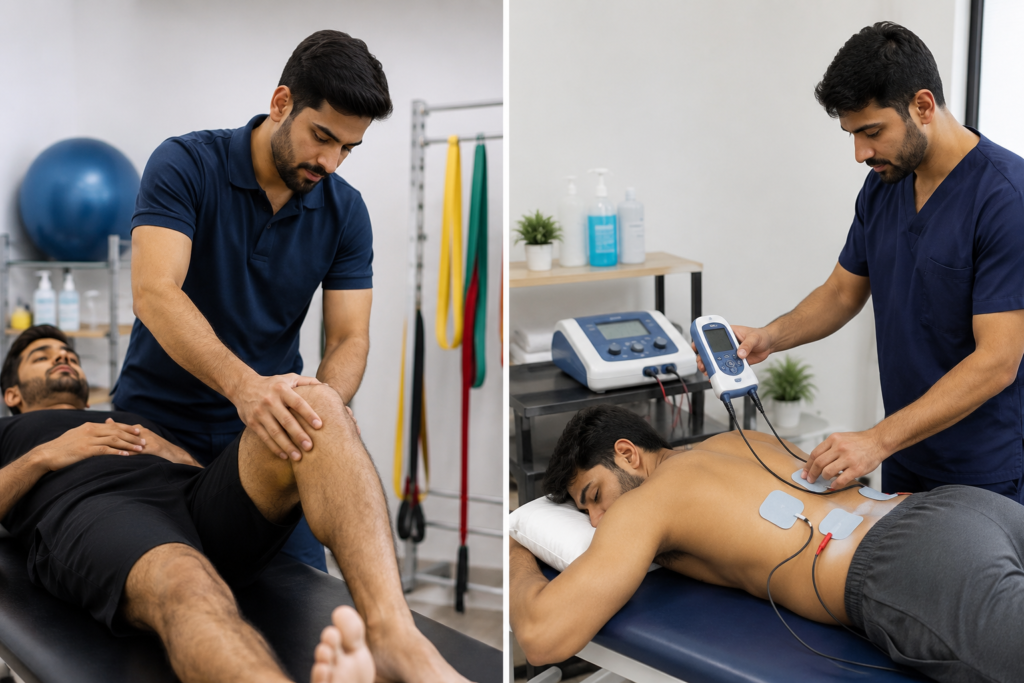
If you are suffering from chronic joint pain, muscle stiffness or recuperating from injuries, choosing the Best Physiotherapy in Gurgaon is a must to get back to your normal routine. The two most popular forms of pain relief are manual therapy (hands-on treatment) and electrotherapy (therapy driven by equipment). But what is the greatest way to alleviate your discomfort? Best Physiotherapy Treatment in Gurgaon: Manual Therapy Manual therapy involves hands-on, skilled techniques that are designed to address the physical cause of discomfort. Electrotherapy Physiotherapy Gurgaon: Tech-Driven Relief If an injury is fresh and a bit too tender for pressure with hands, advanced techniques are a fantastic method of calming the situation. Choosing the Right Physiotherapy Clinic in Gurgaon When you consider how the process of recovery is successful, it is not necessary to pick only one method. The real process of recovery doesn’t involve deciding between manual care and machine-based treatment. It involves using the correct instrument at the appropriate phase of healing. Consult with the Best Physiotherapist in Gurgaon Today To get back to your 100% needs a specific approach created by a highly skilled physiotherapist in Gurgaon who spends the time to observe your movement patterns. If you’re tired of dealing with the discomfort and would like to get it fixed, we are here to assist you. Contact us right now to set up an appointment for a consultation and allow us to help you plan your way towards a pain-free lifestyle!
SI Joint Dysfunction: A Commonly Missed Cause of Lower Back and Hip Pain

If you’re dealing with an unabated, unstoppable pain within your lower back or pelvis, you’re aware of how difficult it is. It is possible that you have been trying stretching or resting to treat an injured disc or sciatica and then realised that it isn’t going away. In many cases, the true problem isn’t with the disc; it’s Sacroiliac (SI) joint dysfunction. The joints that connect the spine and pelvis function as essential shock absorbers. When they are rigid or loose, simple routine movements can cause extreme discomfort. Finding the appropriate physiotherapy treatment in Gurgaon will be the very first stage in determining what’s happening. Since SI joint pain is closely resembling similar back pain issues, obtaining the right diagnosis is essential. It doesn’t matter if you require SI joint dysfunction Treatment in Gurgaon or a targeted hip pain treatment in Gurgaon; a thorough examination can make all the difference. Understanding the Root Cause of Pelvic Pain The sacroiliac joints carry the burden of your upper body to your lower back and the legs. When the joints get injured, the pain is never confined to one area. They often spread out throughout your lower back, down into your buttocks and even down to the hips. Since these signs reflect lumbar pain so closely, it’s extremely difficult to identify. Why Choose Orthopaedic Physiotherapy In Gurgaon? If your pelvic stability is weak, just a couple of general stretches will not suffice. The highly specialised Orthopaedic Physiotherapy in Gurgaon can provide a custom method that is hands-on and based on the specific needs of your body. A specialist in orthopaedics concentrates on the complex muscles that support your pelvis by providing specific, practical options: Finding the Right Physiotherapy Treatment in Gurgaon Recovering from chronic pain demands a careful, scientifically-founded method rather than an instant solution. Complete physiotherapy treatment in Gurgaon concentrates on the long-term recovery of your body to ensure that your pain is gone. Modern clinics provide specialised hands-on treatment with the most advanced recovery strategies to help you move quickly and easily: Exploring Effective SI Joint Dysfunction Treatment in Gurgaon If your day-to-day routine is disrupted by a dull, painful pelvis, or sharp pricks as you sit up and walk around, you need an individualised method. Specialised SI joint dysfunction treatment in Gurgaon is focused on the special mechanics that comprise the sacroiliac area. In addition to easing irritation of ligaments and enhancing the surrounding muscles, this specialised treatment assists in stabilising the pelvic ring to help you regain your mobility. High-Quality Hip Pain Treatment in Gurgaon Since the hip joint is near the pelvis, real issues with the hip (like arthritis) could feel very similar to SI joint problems. The decision to seek out a specialist hip Pain treatment in Gurgaon involves a specific type of diagnostic tests that determine if there are other causes. Locating the source of your discomfort can help you avoid many months of trying and failing, and will steer your healing process in the proper direction. Take the First Step Toward a Pain-Free Life There is no reason to endure chronic lower back and hip pain as normal. Working with an experienced physiotherapist in Gurgaon will provide you with the peace of mind and care needed to fully get back to health. Do not let SI joint pain hold you back from participating in your daily life. Are you ready to put the discomfort in the past? Contact us today for a free appointment with an experienced Physiotherapist in Gurgaon, and we’ll help you get back to the things you love and be pain-free!
Trapezitis vs Cervical Spondylosis: Understanding the Difference and Treatment Options

If you are a long-time worker in front of a computer or looking at your phone, you may feel that a stiff, sore neck is an inevitable part of everyday living. Not every neck pain is caused by the same thing. Two of the most prevalent reasons for shoulder and neck pain can be Trapezius pain as well as Cervical Spondylosis. Although they have similar symptoms, the root causes are completely distinct. Recognising these distinctions will be the very first step in finding the best treatment. The Difference Between Muscle and Bone The key difference lies in what’s causing the discomfort: Identifying the Symptoms For help in identifying these two diseases from one another, take a close look at how pain manifests itself: Managing Your Options for Trapezitis Treatment In Gurgaon If the pain you are experiencing is predominantly muscle-related, it will respond effectively to targeted therapy. Getting professional trapezius treatment in Gurgaon assists in addressing the tightness of muscles through dry needling, myofascial relaxation, and posture-correcting exercises. Since the muscle of the trapezius is extremely sensitive to stress, as well as static work at a desk and repetitive work, a specific physical rehabilitation program is focused on stretching muscles that are tight and strengthening the lower back muscles to stop repetition. Professionally trained physical therapy will help you make lifestyle changes to ensure you keep an ideal posture and avoid the possibility of flare-ups in the future. Addressing Structural Wear: Cervical Spondylosis in Gurgaon In the case of degenerative bone conditions such as Cervical Spondylosis in Gurgaon, the treatment focus is on reducing nerve pressure as well as improving mobility and restoring joint functionality. Although degenerative conditions can’t be reversed completely, their progression is manageable. The treatment typically consists of a mix of ergonomic adjustments, specific cervical traction and exercises to help stabilise the neck, increase the strength of nearby muscle groups and relieve pressure on the nerves. Rehabilitation of Mobility through Physiotherapy in Gurgaon If your condition is muscular or structural, non-invasive rehabilitation is the best option for long-term rehabilitation. The choice to go for complete physiotherapy treatment in Gurgaon will ensure that you get a treatment tailored specifically to your biomechanics. Physical therapy can reduce the need for painkillers by dealing with the root source of pain, whether that is removing stubborn muscle knots or reducing the compression of spine segments. An individual rehabilitation program will guarantee an easier, safer return to the routine. Choosing the Best Physiotherapy Treatment in Gurgaon For a truly healing experience for the body, it requires a scientific method that blends advanced techniques that incorporate hands-on treatment. The best physiotherapy treatment in gurgaon uses a blend of cutting-edge technologies such as laser therapy and ultrasound, along with custom-designed manual therapy that can speed up tissue healing and restore smooth, painless movement. Professionals with experience can design a complete plan for restoring your strength, flexibility, and overall health of your spine. Take the First Step to Relief Don’t allow neck stiffness to affect your daily life. If you’re experiencing chronic pain, seeing a professional Physiotherapist in Gurgaon will help you solve the problem and give you a clear diagnosis. Do you want to be pain-free? Contact us today to book your appointment and get the most effective physical therapy specifically designed for you!
Women’s Health Physiotherapy: Benefits for Daily Wellness

Each woman’s body is an amazing, and often demanding, but often. From the hormone shifts that happen every month that menstrual cycles undergo to the enormous physical changes of the postpartum period, pregnancies, and then menopausal transition, our bodies are always changing. It is often advised that the pains, as well as the sudden, uncomfortable leaks that accompany the menstrual cycle, can be “just part of being a woman.” However, they do not have to be. Women’s health physiotherapy is a committed and gentle approach to healing help you recover confidence, comfort and confidence throughout your daily routine. Core Pillars of Women’s Health Physiotherapy The body requires specialised attention to perform at the highest level. Finding a specialised physiotherapy program to improve women’s health means focusing on the deep muscles that the standard exercise routines in gyms tend to completely ignore. Comprehensive Pelvic Floor Rehabilitation The core of this method lies in pelvic health physiotherapy for women, which is aimed at women. Consider your pelvic floor as supportive muscular hammock, which holds your uterus, bladder, as well as your the bowels. When the muscles become weak, stretched or overly squeezed, things feel odd. The result can be painful bladder leaks whenever you run or laugh, pelvic pressure or even chronic discomfort. The specialised therapy will teach you how to correctly control, relax, and coordinate your muscles in order to be able to enjoy life with no anxiety. Core and Postural Realignment If you’re carrying a pregnancy or are spending a long time sitting at a computer, your body’s centre of gravity will shift with the course of. A specialised approach to physiotherapy can address these changes through: Life-Changing Women’s Physiotherapy Benefits The time you invest in specialist exercise will significantly improve your daily quality of life. Once you have addressed the root reason for physical discomfort, you will notice a profound change in your everyday life: Integration of Physiotherapy in Your Fitness Routine Wellness isn’t about patiently waiting for something to fail and then repairing it. It’s preemptive, preventative treatment. The help of a doctor provides you with practical methods, such as correct breathing methods, specific exercises and improved office ergonomics that are easy to incorporate in your daily routine. In whatever phase of your life, the body needs specific care.If you’re ready to put an end to persistent pain or discomfort, professional guidance is more accessible to you than you imagine. Making an appointment with an experienced professional physiotherapist in Gurgaon is a great way to get the customised assessment and plan that you require. If you work with a seasoned professional in physiotherapist in Gurgaon, it is possible to get expert, personal care needed to stay without pain and be fully functional each day.