
Who Can Benefit from Physiotherapy at Home in Gurgaon?

Recovery isn’t a straight line. Some days feel like real progress. Other days, even getting dressed takes everything you’ve got. And if you’re healing from surgery, managing a chronic condition, or caring for an elderly parent who finds it hard to get around — the idea of traveling to a clinic three or four times a week can feel overwhelming before you even begin. That’s something a lot of families in Gurgaon are quietly dealing with. And it’s exactly why physiotherapy at home in Gurgaon has grown into such a trusted option for so many people here. Instead of you going to the care, the care comes to you. Who Actually Needs Physiotherapy at Home in Gurgaon? Probably more people than most realize. This isn’t a service reserved for extreme cases. It’s for anyone who finds that the journey to a clinic gets in the way of actually getting better. Some of the people who tend to benefit the most: For many of these patients, the commute isn’t just inconvenient. It’s genuinely exhausting, sometimes even harmful. Home care means they can rest before and after a session, stay consistent, and keep their energy focused on healing. What Does Physiotherapy in Gurgaon at Home Actually Look Like? It looks a lot like a clinic visit — just without the waiting room or the drive. Physiotherapy in Gurgaon at home is a fully structured clinical service. Your physiotherapist arrives at your home, does a proper hands-on assessment, and builds a treatment plan around your specific needs and progress. A typical session might cover: The location changes. The quality doesn’t. Searching for Physiotherapy Services at Home Near Me? Here’s What to Look For When you search for physiotherapy services at home near me, you’ll find plenty of options — which actually makes the choosing harder, not easier. Here’s what genuinely matters when you’re sorting through them: And one more thing — proximity matters. A service close to you means fewer cancellations and more reliable scheduling, which matters more than most people realize when you’re trying to maintain momentum in your recovery. How to Find the Best Physiotherapy Near Me in Gurgaon The best physiotherapy clinic near me in Gurgaon may not be the one which advertizes the most or has the fanciest website. It’s the one that really gets what you’re up against and has been through it himself. Before booking, it’s worth asking a few straightforward questions: A good provider won’t dodge these questions. They’ll answer them plainly, because they know that trust is the foundation of any effective rehabilitation — not just technique. You Can Start Getting Better Right Where You Are You don’t need to wait until things get easier to begin. Home-based physiotherapy brings the professional care, personal attention, and clinical support you need — right into the space where you feel most comfortable. Whether you’re rebuilding strength after surgery, managing a long-term condition, or simply trying to move through the day with less pain, the right support can make a real difference. To find qualified, experienced physiotherapy care across Gurgaon, visit Physiotherapist in Gurgaon and take the first step toward recovery that works around your life — not the other way around.
Sports Physiotherapy in Gurgaon: Rehab for Every Athlete
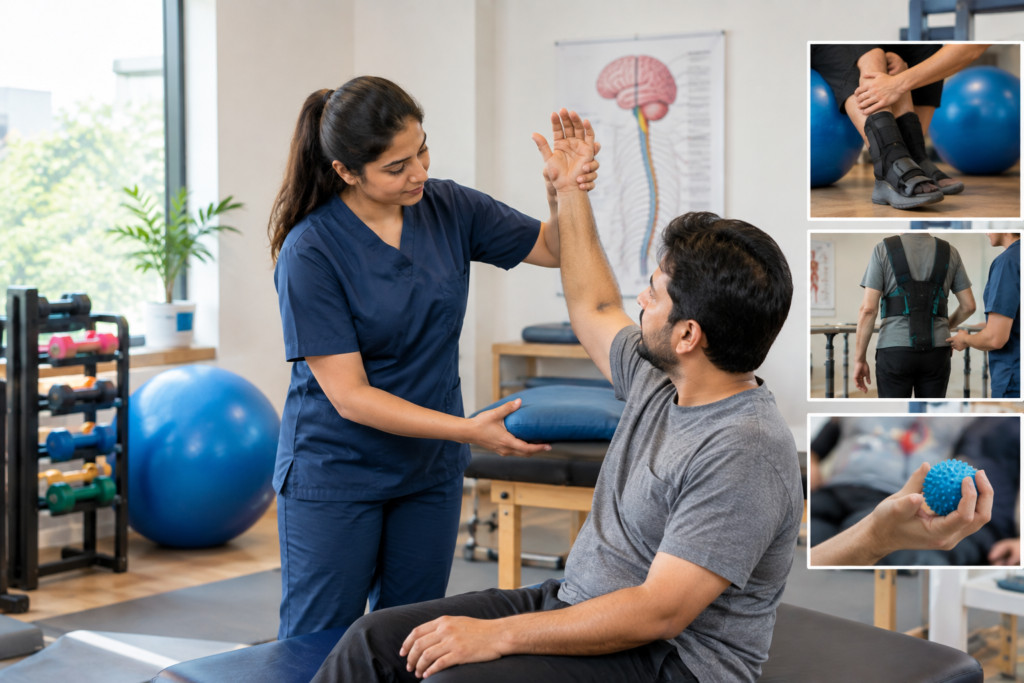
There’s a moment every active person knows — the one where something doesn’t feel quite right. Maybe your knee started aching halfway through a run. Maybe your shoulder complained during a swim set you’d done a hundred times before. Whatever it was, you probably tried to push through it. And maybe that worked for a while. But here’s the thing: your body is worth more than just pushing through. That’s where Sports Physiotherapy in Gurgaon comes in. Not as a last resort, but as a real, practical way to understand what’s going on and get back to moving the way you want to. Gurgaon has become home to a genuinely active community. Runners, gym-goers, weekend athletes, swimmers — people who show up for themselves day after day. When injuries happen in that context, they don’t just hurt physically. They interrupt a lifestyle. Good sports physiotherapy gets that. Why Choose Sports Physiotherapy Near Me? Let’s be honest — the best care is the care you actually follow through on. That’s one of the most practical reasons to look for sports physiotherapy near me. When it’s close by, you go. And showing up consistently is what moves recovery forward. Beyond convenience, though, sports physiotherapy is a different kind of care than what most people picture when they hear “physio.” It’s not just about the injury in isolation. A good sports physiotherapist looks at how you move, what your training looks like, what demands your sport places on your body — and works backward from there. That context changes everything about how treatment is planned and delivered. Chondromalacia Patella Treatment in Gurgaon Runner’s knee is more common than most people realise, and more misunderstood too. Officially called chondromalacia patella, it happens when the cartilage underneath your kneecap starts to soften or wear down — usually because the kneecap isn’t tracking the way it should during movement. The result is that familiar dull ache at the front of the knee, sometimes paired with a subtle grinding sensation on stairs or after sitting for a while. Chondromalacia Patella Treatment in Gurgaon isn’t just about icing your knee and resting. Real rehabilitation looks at why it’s happening and builds a plan to correct it. Depending on what your assessment shows, treatment might involve: Six to eight weeks of consistent work tends to make a real difference for most people. It’s not a quick fix, but it’s a lasting one. Shoulder Impingement Treatment in Gurgaon Shoulder impingement has a way of starting small. A bit of tightness when you reach overhead. Some discomfort after a swim. You adjust, compensate, and carry on — until one day the compensation stops working and the pain becomes hard to ignore. It’s especially common in swimmers, overhead athletes, and people who spend long hours at a desk with their shoulders rolled forward. The mechanics are similar in each case: there’s not enough space in the joint, and the rotator cuff tendons are getting compressed during movement. Shoulder Impingement Treatment in Gurgaon is really about creating that space again — and keeping it. That means working on: Catch it early, treat it properly, and most people get full movement back without surgery or long-term restriction. Your Recovery Starts Here Injuries are part of active life. They’re not a sign that you’ve failed or overdone it — they’re just part of the deal when you take movement seriously. What you do after the injury is what shapes the rest of the story. Sports Physiotherapy in Gurgaon gives you a clear, evidence-based path back to the activity you care about. Whether it’s a knee that’s been bothering you for months or a shoulder that finally gave out, there’s a plan for it — and people who genuinely know how to help. To find out more about your options and book a consultation, visit Physiotherapist in Gurgaon. Take that first step. The rest follows. Embrace the recovery. Reclaim the movement. Get back to the game you love.
Neuro Physiotherapy in Gurgaon: Reclaim Your Movement
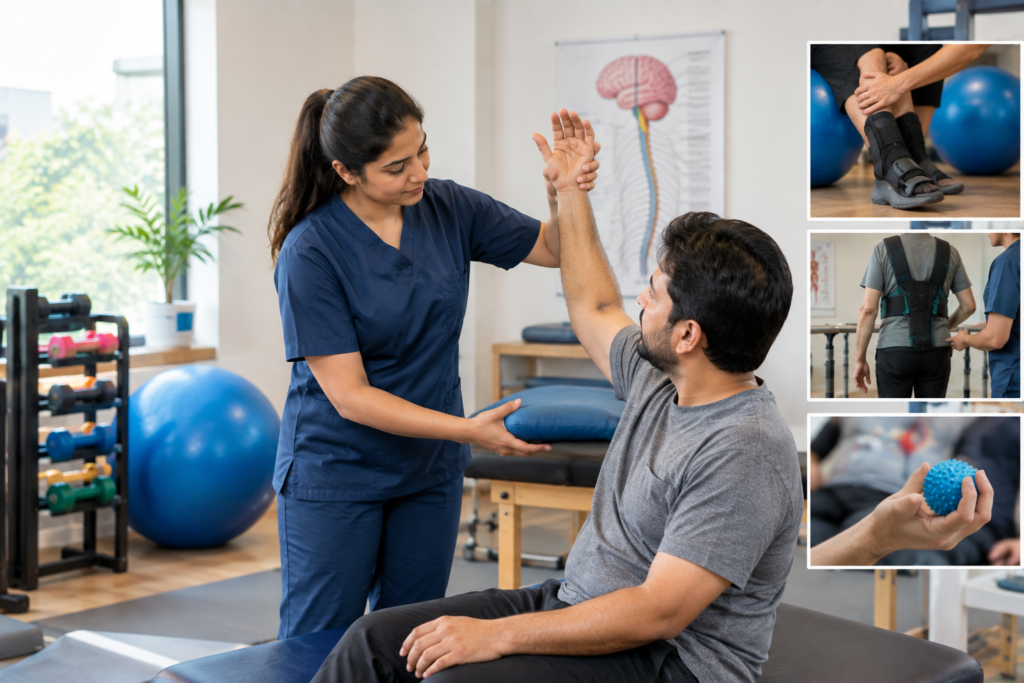
There’s a moment — and if you’ve lived it, you know exactly what we mean — when something as ordinary as taking a step or blinking feels like climbing a mountain. Neurological conditions have a way of stealing the little things first. The morning walk. The easy smile. The instinct to reach out and hold someone’s hand. If you or someone you care about is going through this right now, we want you to hear something clearly: recovery happens. Real, meaningful recovery. Neuro Physiotherapy treatment in Gurgaon is helping people find their way back — not just to movement, but to themselves. What Is Neuro Physiotherapy Treatment in Gurgaon? Most people assume physiotherapy is just about sore muscles and sports injuries. Neuro physiotherapy is different. It works at the intersection of the brain, the nervous system, and the body — because when a stroke, a brain injury, or a spinal condition disrupts the signals between them, you need therapy that addresses all three. Neuro Physiotherapy treatment in Gurgaon draws on hands-on techniques, carefully structured exercises, and rehabilitation approaches backed by neuroscience. But beyond the clinical side of things, what makes it work is this: good therapists treat the person, not just the diagnosis. Your plan is built around your condition, your daily life, and what matters most to you. Foot Drop Treatment in Gurgaon Picture this — you’re walking across a room, and your foot catches on the floor. Maybe you’ve stumbled. Maybe you’ve fallen. Foot drop makes lifting the front of the foot difficult or impossible, usually because of nerve damage somewhere along the chain from your spine to your leg. It doesn’t sound like much until it starts affecting every single step you take. Foot Drop Treatment in Gurgaon typically focuses on: Many people come in barely able to clear the floor with their foot and leave months later walking confidently without support. It takes time and commitment, but the change is real. Bell’s Palsy Treatment in Gurgaon One morning, you wake up and one side of your face just… doesn’t work. You can’t close your eye properly. Your smile looks different. Drinking water becomes a task. Bell’s palsy is shocking in how suddenly it arrives — and how isolating it can feel. Most cases do improve on their own, but physiotherapy makes a significant difference in how quickly you recover and how completely. Bell’s Palsy Treatment in Gurgaon includes: The earlier you start, the better your outcome tends to be. If you notice symptoms, don’t wait — a physiotherapist can assess you quickly and get you started. Hemiplegia Treatment in Gurgaon Hemiplegia — paralysis down one full side of the body — most often follows a stroke or serious brain injury. It can feel like life has been split in two: the person you were before, and the reality you’re navigating now. That feeling is valid. And it doesn’t have to be permanent. The brain is more adaptable than most people realize. It can build new pathways. It can compensate and rewire — especially with the right kind of consistent, focused input. Hemiplegia Treatment in Gurgaon is built on this principle: Some days the progress feels small. But small is still forward — and forward is everything. Take the Next Step Toward Recovery You are not your diagnosis. Whether you’re dealing with foot drop, Bell’s palsy, hemiplegia, or another neurological condition, the right physiotherapy team can genuinely shift what’s possible for you. You deserve care that sees the whole person — your goals, your story, your potential. If you are looking for expert neuro physiotherapists in the neighborhood, then visit Physiotherapist in Gurgaon at physiotherapistingurgaon.com. It’s a simple, dependable resource that links patients throughout the city to professionals in neurological rehabilitation. Make the first move. Embrace the process. Trust the journey. Reclaim your movement.
Post-Surgery & Post-Fracture Physiotherapy in Gurgaon: What Recovery Involves

Here’s something most people don’t talk about: the hardest part of an injury isn’t the injury itself. It’s what comes after. The surgery is done, the cast is off, you’ve been sent home — and now you’re standing in your kitchen wondering why your arm still doesn’t feel like yours. Recovery is messy. Some mornings you’ll feel like you’ve turned a corner. Other mornings, tying your shoes will feel like a project. Both of those days are normal. What matters most is having the right support to guide you through them — and for many people healing in this city, Post Operative Physiotherapy in Gurgaon has been exactly that. No two recoveries are the same. Your history, your body, your goals — they all shape the path. But one thing stays consistent: structured, personalized physiotherapy gives you your best chance at getting back to the life you had before. Post Fracture Treatment in Gurgaon Broken bones get a lot of attention. The fracture, the cast, the x-rays. But what happens after the bone heals? That part doesn’t get talked about nearly enough. When the cast comes off, you’re often left with a limb that feels stiff, weak, and oddly foreign. Muscles that weren’t used properly for weeks need waking up. Joints that were held in place need coaxing back to their full range. That’s the work of Post Fracture Treatment in Gurgaon — patient, progressive, and built around where you actually are right now, not where you were before the injury. It starts slow. Gentle movement. Light manual therapy. Basic exercises that probably feel almost too easy at first. And then, week by week, things begin to shift. The stiffness gives way. Strength starts to return. You stop bracing yourself every time you move. That transformation doesn’t happen overnight, but it does happen. Post Operative Physiotherapy in Gurgaon Surgery is a beginning, not an end. The real healing — the kind that actually determines how your life looks six months from now — happens in the weeks and months of rehabilitation that follow. Post Operative Physiotherapy in Gurgaon is built to work hand in hand with your surgical care. Early sessions tend to focus on the immediate challenges: managing swelling, keeping things moving, making sure scar tissue doesn’t become a long-term problem. As your body settles, the sessions evolve. You start rebuilding strength. Function comes back — slowly, then all at once. A lot of people describe a specific moment during this phase. It might be the first time they walk to the corner without stopping. The first time they sleep through the night without waking from pain. Those moments are small, but they matter more than almost anything. Arthroplasty Treatment in Gurgaon Joint replacement is a major decision. Months, sometimes years, of pain leading up to it. And then a surgery that changes the structure of your body. What comes next is just as significant. Arthroplasty Treatment in Gurgaon is about learning to live well with your new joint — not just getting through the early weeks, but genuinely rebuilding the strength, confidence, and movement patterns that make daily life feel effortless again. That means relearning the basics at first: sitting, standing, walking with proper alignment. Then, as the foundation solidifies, working toward something more — going up stairs without holding the railing, getting back to a sport you’d given up, keeping up with grandchildren. That moment when it all clicks looks different for everyone. But it comes. Tendonitis Treatment In Gurgaon Tendonitis rarely announces itself dramatically. It starts as a dull ache after a workout. A little soreness in the elbow after a long day of typing. Easy to brush off — until one day you realize it’s in the background of everything you do. Tendonitis Treatment in Gurgaon takes aim at the actual source of the problem, not just the day-to-day discomfort. That means targeting the inflamed tendon directly, building the surrounding strength that takes load off the injury, and identifying movement habits that may have contributed to the issue in the first place. Depending on what your body needs, treatment might include specific stretching protocols, progressive strengthening, ultrasound therapy, or dry needling. The goal isn’t to manage it indefinitely. It’s to resolve it — and keep it from coming back. You Don’t Have to Figure This Out Alone Recovery takes time. It takes patience. And on the harder days, it takes trust that the effort is worth it. Whether you’re nursing a fracture back to full strength, rebuilding after surgery, adjusting to a new joint, or finally taking that persistent tendon pain seriously — having the right people in your corner changes everything. Show up consistently. Give yourself grace. And work with a team that meets you where you are. Visit the Physiotherapist in Gurgaon website to learn more about personalized treatment plans and take the next step in your recovery.
Common Muscle & Joint Injuries in Gurgaon: When Physiotherapy Helps
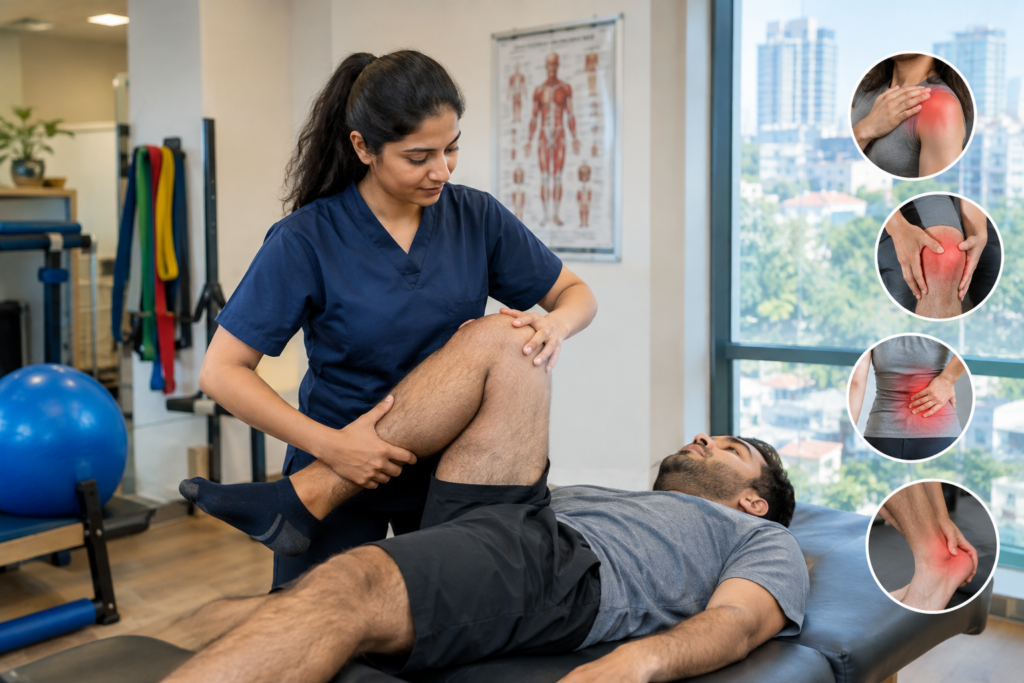
Gurgaon keeps moving, and so do you. Early mornings, packed schedules, the occasional weekend sport you probably didn’t warm up for — your body handles a lot. Most of the time, it copes just fine. But then one morning your neck is so stiff you can barely turn to check your blind spot. Or your shoulder starts aching by mid-afternoon for no obvious reason. Or you roll your ankle on a broken footpath and, two weeks later, it still doesn’t feel right. These things creep up on you. And a lot of people in this city are quietly dealing with exactly this — not knowing that Trapezitis Treatment in Gurgaon and other physiotherapy solutions are more available, and more effective, than most people realize. The good news? You don’t need surgery or a long course of painkillers to get better. Physiotherapy treats the root of the problem — not just the symptom. Here’s an honest look at four injuries that physios in Gurgaon see all the time, and what getting better actually involves. Trapezitis Treatment in Gurgaon Picture the muscle that runs from the back of your neck, fans out across your shoulders, and tapers down your upper back. That’s your trapezius — and when it’s inflamed, you feel it constantly. A burning tightness. A stiffness that makes turning your head feel like work. Pain that builds through the day and peaks by evening. Sound familiar? Trapezitis treatment in Gurgaon is less about fixing the muscle and more about understanding why it’s struggling in the first place. Poor posture, an awkward desk setup, hours of looking down at a phone — these all overload the trapezius over time. A physio will assess exactly what’s going on, then build a plan around that. Heat therapy, dry needling, and hands-on manual work tend to bring fast relief. Strengthening exercises that follow help make sure the problem doesn’t just come back the moment you sit down at your desk again. Trigger Point Pain Treatment in Gurgaon You know that spot — the one that, when someone presses it, sends a dull ache radiating somewhere else entirely? That’s a trigger point. It’s essentially a tight knot of muscle fiber that’s locked up and refusing to release. Trigger points are sneaky because the pain often shows up somewhere far from where the knot actually is. Neck tension that causes headaches. A shoulder knot that aches down the arm. Trigger point pain treatment in Gurgaon is focused and hands-on. Your physiotherapist will work directly on the affected area using pressure techniques, myofascial release, and sometimes dry needling to get the muscle to let go. The session can feel intense in the moment, but most people walk out feeling noticeably lighter. The real win comes from the follow-up stretches and movement habits that stop the same knots from reforming. Calf Strain Treatment in Gurgaon It happens in an instant. A sudden sprint, a hard push-off, or just an awkward step — and you feel a sharp pull at the back of your lower leg. Sometimes there’s a pop. Calf strains are graded by how severe the tear is, but even a minor one can sideline you if you don’t treat it properly from the start. Calf strain treatment in Gurgaon begins with managing the damage — rest, ice packs, compression bandaging, and keeping the leg elevated to reduce swelling. Once the initial flare-up settles, your physiotherapist gradually introduces stretching and strengthening exercises to rebuild the muscle. The pacing here matters more than most people expect. Come back too fast and you risk tearing it again. A structured program gives your calf the time it needs to heal fully — and then some. Ankle Sprain Treatment in Gurgaon Ankle sprains are one of those injuries almost everyone has had at least once. An uneven surface, a misstep during a game, a wrong landing — and suddenly you’re on the ground with a swollen ankle that’s turning purple. It looks alarming, but most sprains heal well with the right care. Ankle sprain treatment in Gurgaon starts with the RICE protocol — rest, ice, compression, and elevation — to get the swelling under control in the first 48 to 72 hours. From there, physiotherapy helps you rebuild in stages: first your range of motion, then your strength, and finally your balance. That last part — balance and proprioception training — is something a lot of people skip, and it’s usually why they keep re-spraining the same ankle. Once your body learns to respond quickly to uneven surfaces again, you’re a lot less likely to roll it a second time. You Deserve to Move Without Pain Here’s something worth saying plainly: you shouldn’t have to just live with this. Muscle and joint pain isn’t something you earn your way out of by pushing harder. Most of these conditions — whether they showed up last week or have been bothering you for months — respond well to proper physiotherapy. The earlier you start, the faster you recover. If you’re ready to stop managing the discomfort and actually fix it, a trusted Physiotherapist in Gurgaon website can point you toward the right specialist, help you understand your options, and get you started on a recovery that fits your life. Move well. Feel better. You’ve got places to be.
Neck & Upper Back Pain in Desk Workers: Fix It for Good

Eight hours at a desk doesn’t sound like much of a threat. Yet week after week, that same position—chin poking forward, shoulders creeping up toward your ears, screen sitting a little too high or too low—slowly wears down the muscles and joints in your neck and upper back. If you’ve been hunting for neck pain physiotherapy in Delhi, you already know the feeling: that stiff, nagging ache that shows up around 3 p.m. and refuses to leave. Here’s the thing most people miss—by the time it hurts enough to bother you, the problem’s usually been brewing for months. The good news? It’s very fixable. Let’s talk about what’s actually going on, and what a decent physio can do about it. Why Desk Workers Keep Ending Up With Neck Pain Your head weighs roughly 10 to 12 pounds when it sits neutrally over your spine. Tip it forward just 30 degrees—which, let’s be honest, is where most of us live while staring at a laptop—and the load on your neck jumps to around 40 pounds. Do that all day, every day, and the small muscles running up the back of your skull start to complain. Loudly. A good physiotherapist won’t just tell you to “sit up straight.” They’ll figure out which muscles are working overtime, which ones have quietly checked out, and where your joints have stopped moving the way they should. From there, it’s usually a mix of hands-on work and specific exercises that teach your neck to move properly again—not the throwaway stretches you hold for ten seconds and forget. That Ache Between Your Shoulder Blades Upper back pain in desk workers almost always traces back to one of three culprits: muscles stuck holding tension from sitting still too long, stiff joints in the mid-back, or pain that’s actually referred up from the neck. Sometimes you get lucky and it’s all three at once. This is where back pain physiotherapy in Delhi earns its keep. Treating a tight, overworked muscle looks nothing like treating a joint that won’t budge—so guessing rarely helps. You know the symptoms: that dull throb between the shoulder blades, morning stiffness, and the maddening urge to crack your back that never quite delivers relief. If any of that rings a bell, don’t wait it out. It tends to get more stubborn the longer it sits. What Actually Happens at Your First Visit Walk into a proper physiotherapy clinic in Delhi and you’ll notice the first appointment covers a lot more than the sore spot. A good assessment looks at your posture, how far you can move, how strong certain muscles are, and how your body moves overall. Expect questions too—about your desk setup, your daily routine, how long this has been going on. Why the deep dive? Because upper back pain is sneaky. Tight hips from sitting, a lazy core, a monitor parked six inches too low—any of these can be the real driver. Chasing the pain alone gives you a few good days. Finding the actual cause is what keeps it gone. Strategies That Genuinely Move the Needle Here’s roughly what physiotherapy treatment in Delhi tends to involve for desk-related pain, though the exact mix depends on you. Manual therapy comes first for a lot of people—hands-on joint mobilization and soft tissue work to get things moving and dial down the pain. When knots refuse to release, dry needling or trigger point work can reach what stretching can’t. Then comes the retraining, which is really the point of the whole thing. Postural work teaches your body to hold itself well through better muscle activation rather than sheer willpower. Strengthening targets the neglected players—deep neck flexors, the stabilizers in your mid-back, the muscles around your shoulder blades. And yes, someone will probably nudge you to raise that monitor or adjust your chair, because small ergonomic tweaks add up over a working week. No single trick fixes everything, and anyone who promises that is overselling. Real physio is a process. Sessions build on each other, and the home program you’re given between visits is what keeps the momentum going. Where to Start Desk-related neck and upper back pain almost never sorts itself out—not while the habits causing it are baked into your Monday-to-Friday. The earlier you deal with it, the less effort it takes to turn around. Wait too long and you’re untangling months of adaptation. If you’re in Delhi NCR and want structured, experienced care, the team at Physiotherapist in Gurgaon offers both clinic and home-based sessions built around your condition and your schedule. Book an assessment, find out what’s really driving your pain, and get a clear plan to fix it for good.
Post-Surgery Physiotherapy in Delhi: What to Expect in the First 6 Weeks
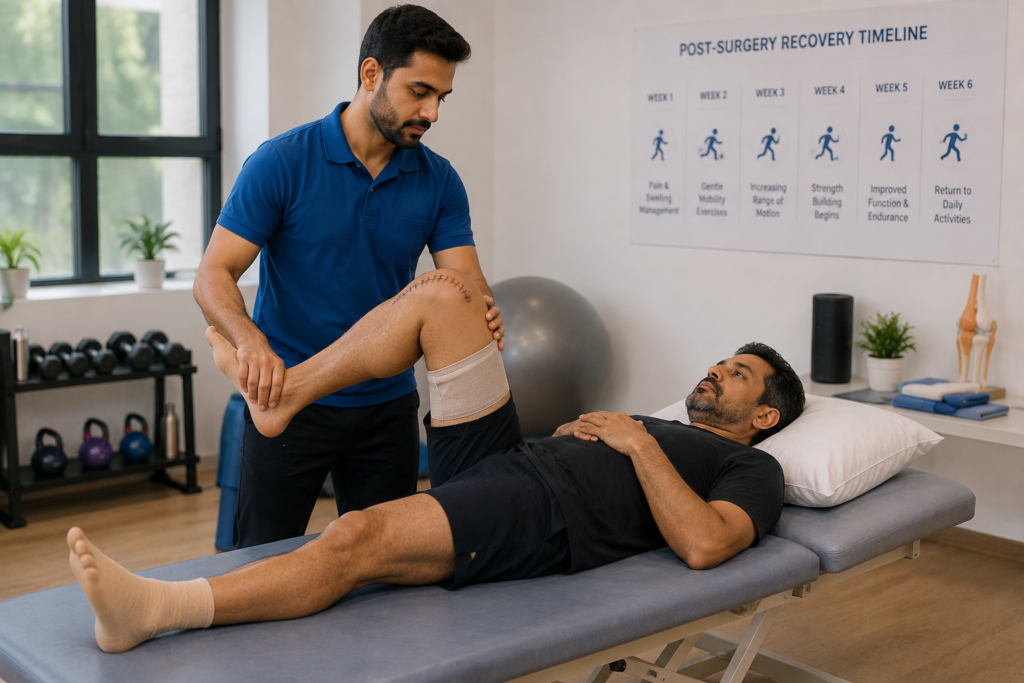
Surgery is the part everyone dreads. But honestly? The weeks after are where the real work happens. The slow mornings where just getting out of bed feels like an achievement. The frustration of not being able to do things you never had to think about before. That’s the part nobody warns you about. If you’re recovering in the capital, finding good post-surgery physiotherapy in Delhi isn’t just helpful — it’s what actually gets you back on your feet. Here’s a straightforward look at what those first six weeks tend to look like, and what you should keep in mind along the way. The First Two Weeks: Slow and Steady Right after surgery, your body is in protection mode. Your physiotherapist isn’t going to push you hard at this stage — and they shouldn’t. The goal is simple: keep things from stiffening up while the surgical site starts to heal. Expect gentle movements, some breathing work, and techniques to bring the swelling down. It might feel like not much is happening, but these early sessions lay the foundation for everything that comes later. Don’t rush this phase. Seriously. Weeks Three and Four: Things Start Moving This is where sessions start to feel more like actual rehab. You’ll begin working on light strengthening, balance, and — depending on what surgery you had — possibly putting some weight through the area for the first time. There’s a real line to walk here. Too much, too soon, and you risk undoing the repair. Too little, and your muscles start to waste away. A good physiotherapist reads your body and knows when to push and when to ease off. That judgment is what you’re paying for. Weeks Five and Six: Getting Back to Real Life By this point, the focus shifts to function. Can you walk up the stairs without holding on? Carry the groceries? Move through your morning routine without stopping to manage pain? These become the benchmarks. Your physiotherapist should also be preparing you for independence — putting together a home exercise program so you keep making progress even after formal sessions wrap up. A good discharge plan is part of good care. How to Choose the Right Physiotherapy Treatment in Delhi Not all clinics are equal. When looking for physiotherapy treatment in Delhi, it’s worth taking the time to find a provider who actually specializes in post-surgical rehab — not just someone who handles general aches and pains. A few things worth asking upfront: Most people need two to three sessions a week in the early stages. That usually eases off as recovery progresses. Why Home Physiotherapy Services in Delhi Might Be the Right Call Here’s the thing — getting to a clinic multiple times a week sounds doable until you’ve just had surgery and every car ride is an ordeal. Home physiotherapy services in Delhi take that problem off the table. But there’s more to it than just saving yourself a trip. When your physiotherapist comes to you, they see your actual home. They can spot hazards, adapt exercises to your real space, and give you advice that fits your life — not a generic clinic environment. For older patients or those recovering from hip and knee surgeries, that kind of tailored input can make a meaningful difference. Before you book, check that the therapist is properly registered, experienced with your type of surgery, and brings their own equipment. When it comes to home physiotherapy services in Delhi, those basics matter. What to Look for in the Best Physiotherapy in Delhi Finding the best physiotherapy in Delhi comes down to more than credentials and location. Yes, look for therapists registered with the Indian Association of Physiotherapists (IAP) or those with postgraduate training in orthopedic or neurological rehab. But also pay attention to how they communicate. Do they explain what’s happening in your body? Do they set honest expectations? Do they adjust when something isn’t working? And importantly — will you see the same person each visit, or a different face every time? Continuity matters more than most people realize. A therapist who knows your case can spot progress and problems in ways that a rotating roster simply can’t. Ready to Start? The six weeks after surgery aren’t something to navigate alone or leave to chance. With the right physiotherapist guiding the process, recovery is faster, less painful, and a lot less uncertain. If you’re in the Delhi NCR region and need reliable, experienced post-surgical rehabilitation, the team at Physiotherapist in Gurgaon offers both clinic-based and home sessions tailored to where you are in your recovery. Book an assessment — and take that first real step back toward feeling like yourself again.
Sports Injury Rehab in Delhi: Your Return-to-Activity Timeline

Ask any physiotherapist who’s worked with athletes long enough, and they’ll tell you the same thing — the hardest part of recovery isn’t the exercises. It’s the waiting. That gap between “I feel fine” and “you’re actually ready” is where most people go wrong. They push back too soon, the injury flares up, and suddenly they’re starting from scratch. We’ve watched it happen more times than we’d like. The good news is it doesn’t have to go that way. With the right sports physiotherapy in Delhi, returning to sport can be a structured, confident process — not a guessing game. Why Sports Physiotherapy in Delhi Is Worth Taking Seriously Delhi keeps moving. Runners clock early mornings at Lodhi Garden. Cricketers pack into grounds on weekends. Gym-goers, swimmers, footballers — this city is full of people who take activity seriously. And when injury hits, most of them do what feels logical: they rest until the pain fades, then pick up where they left off. Here’s the problem with that approach. Pain fading and an injury healing are two different things. Muscle imbalances, movement compensations, small structural issues — these can sit quietly beneath the surface well after the soreness is gone. Sports physiotherapy in Delhi is built around finding those things before they become the next injury. A good physiotherapist isn’t just treating the bit that hurts — they’re asking why it happened and making sure the answer changes something. What Does Sports Injury Physiotherapy in Delhi Actually Treat? More than most people expect. Sports injury physiotherapy in Delhi covers everything from a rolled ankle on a morning run to months of post-surgical rehabilitation after a serious knee injury. Some of the most common conditions include: Timelines vary a lot. A mild ankle sprain might be sorted in two to three weeks with proper care. An ACL reconstruction is a nine-to-twelve-month commitment — sometimes longer, depending on the person and the sport. Anyone giving you a firm return date before they’ve properly assessed you is cutting corners. A good physiotherapist will be honest with you, even when that honesty is inconvenient. What Makes the Best Sports Physiotherapy in Delhi Stand Out? There’s a gap between going through the motions and getting care that actually works. The best sports physiotherapy in Delhi isn’t just about having the right equipment or a long list of services. It’s about how someone approaches your specific situation. In practice, that means: Physiotherapy Treatment in Delhi: How the Stages Actually Work Physiotherapy treatment in Delhi for sports injuries follows a layered progression. The stages don’t always have clean edges — some overlap, some take longer than expected — but the structure tends to look like this: Stage 1 — Settling things down (Days 1–7)The first job is calming the injury. Pain management, reducing swelling, gentle movement to prevent stiffness. This phase is often underestimated — what happens in the first week shapes what the next two months look like. Stage 2 — Getting movement back (Weeks 1–3)Once the acute phase settles, the focus shifts to restoring range of motion. This takes patience. Pushing too hard here is one of the most reliable ways to drag out a recovery that should have been straightforward. Stage 3 — Building strength (Weeks 3–8)Now the real work starts. Progressive loading — beginning conservatively and building steadily — helps the muscles around the injury regain their capacity to handle real demands. This stage is where consistency matters most. Stage 4 — Moving like an athlete again (Weeks 6–12+)Rehab starts to feel more like training. Running, change of direction, reactive movements — exercises that actually reflect the demands of your sport. This phase often takes longer than people anticipate. That’s not a setback; it’s just how the body works. Stage 5 — Return to sport (timeline varies)This isn’t a date circled on a calendar. Return to sport happens when objective benchmarks are met — strength symmetry, movement quality, the ability to perform sport-specific tasks under pressure without compensating. Feeling ready and being ready aren’t always the same thing, and the difference matters. Finding the Right Support Near You We believe every athlete deserves a recovery plan built around their actual body and their actual goals — not a standard protocol handed to everyone with the same diagnosis. Real recovery takes real attention, and it starts with someone willing to look closely. If you’re in the Delhi-NCR area and looking for that kind of care, our team is closer than you might think. Visit our Clinic Physiotherapist in Gurgaon to learn more about how we work with athletes and active individuals across the region — the same thorough, evidence-based approach whether you’re in South Delhi or just over the border in Gurgaon.
Home vs Clinic Physiotherapy in Delhi: Which Helps You Recover Faster?
Recovering from an injury takes a lot out of you. So does managing something long-term, like a bad back or a knee that never quite healed right. The last thing you want is to make the wrong call on where to get treatment. If you’re weighing up home physiotherapy services in Delhi, you’re not alone — it’s a question we hear a lot. Here’s an honest look at both options. What Does a Home Physiotherapist in Delhi Actually Offer? A home physiotherapist in Delhi comes to you. That sounds simple, but it changes the whole dynamic of treatment. Your physiotherapist sees you in your actual space — the chair you spend eight hours in, the stairs you struggle with every morning, the bed you’ve been recovering on for the past three weeks. That context tells them things a clinic visit simply can’t. For elderly patients, people recovering from surgery, or anyone for whom getting out of the house is genuinely painful, home care isn’t just convenient. It’s often the smarter choice. Home Physiotherapy Services in Delhi — What to Expect Home physiotherapy services in Delhi cover more than most people expect. Manual therapy, exercise programs, pain management, and postural work can all be done at home by a trained physiotherapist. They’ll assess you first — properly — before putting together a plan. Just like they would in a clinic. Where home visits fall short is equipment. Hydrotherapy pools, advanced electrotherapy machines, traction units — those stay at the clinic. For a lot of conditions, that’s not a problem. For some, it matters quite a bit. A good home care provider will be upfront with you about which side of that line you’re on. Physiotherapy Treatment in Delhi — Comparing Both Approaches Physiotherapy treatment in Delhi looks different depending on where you receive it, but both settings can produce real results. The difference is mostly about what your condition actually needs. Home care tends to work well when: A clinic visit makes more sense when: Plenty of patients do both — clinic visits early on, then home sessions once things settle. It’s not always one or the other. When Is the Best Physiotherapy Clinic in Delhi Worth the Commute? The best physiotherapy clinic in Delhi gives you something a home visit genuinely can’t: a purpose-built space with the full range of clinical tools. Electrotherapy, dry needling, traction, gym-based rehab — all of it is easier to deliver when the setup is right. Clinics also bring people together. If your recovery involves a physiotherapist, a pain specialist, and an occupational therapist working in tandem, a clinic makes that coordination far simpler. That said, the setting matters less than the person treating you. A skilled, attentive home physiotherapist will get you further than an average clinic every time — and you won’t lose an hour of your day to traffic. Making the Right Call for Your Recovery Recovery rarely goes in a straight line. We know that. The best plan is the one that actually fits into your life — one you can keep showing up for, with someone you trust doing the work alongside you. If you’re near the Delhi-NCR border, it’s worth knowing that good care extends beyond city limits. Our team at Physiotherapist in Gurgaon works with patients across the region — same thorough assessments, same evidence-based treatment — whether you’re in South Delhi or closer to Gurgaon.
How to Choose the Right Physiotherapy Clinic in Delhi

Chronic pain is exhausting — and not just physically. It creeps into your sleep, your concentration, and your everyday routines in ways that are hard to explain to someone who hasn’t lived through it. Getting the right help isn’t something you should have to fight for. But in a city as big as Delhi, walking into the right physiotherapy clinic in Delhi takes more than a quick Google search. Here’s what we’ve seen actually matters. Why Choosing the Right Physiotherapy Clinic in Delhi Matters Here’s something most people don’t realize until they’ve already wasted a few weeks at the wrong place: not every clinic knows how to handle chronic pain. There’s a real difference between treating a fresh sports injury and managing something that’s been with you for months or years. A physiotherapy clinic in Delhi set up for post-surgical rehab may genuinely lack the equipment and protocols for conditions like fibromyalgia, sciatica, or persistent lower back pain. The wrong clinic doesn’t just fail to help — it can set you back. We believe starting with the right fit saves you time, money, and a lot of frustration. What to Look for in the Best Physiotherapist in Delhi Start with credentials. Any physiotherapist you consider should hold a recognized BPT or MPT degree, and ideally have additional training in musculoskeletal or neurological conditions. But beyond the paper qualifications, experience with chronic pain patients specifically is what separates a good clinician from a great one. Three things worth checking before you commit: If a clinic hands you a printed sheet of generic exercises after a ten-minute consult, walk away. Chronic pain doesn’t respond to one-size-fits-all plans. What Range of Physiotherapy Services in Delhi Should a Good Clinic Offer? A clinic worth your time offers more than one or two treatment options. Physiotherapy services in Delhi vary a lot in scope, and for chronic pain specifically, that range matters. A solid clinic should offer: Don’t hesitate to ask: “What would treatment actually look like for someone with long-term pain?” The answer will tell you a lot about how that clinic thinks. Understanding Physiotherapy Treatment in Delhi for Chronic Pain Chronic pain doesn’t follow a straight line. Some weeks feel like real progress. Others feel like you’re back where you started. Good physiotherapy treatment in Delhi accounts for that reality — it works in phases rather than pushing for one fixed endpoint. Typically, that means first bringing down acute flare-ups, then gradually rebuilding strength and range of motion, and finally giving you the tools to manage things independently. The goal isn’t just to feel better inside the clinic. It’s to feel better at the grocery store, at your desk, on an ordinary Tuesday. One practical thing to watch for: by your third session, your physiotherapist should have discussed measurable goals with you. If that conversation hasn’t happened, bring it up yourself. Finding the Right Clinic — and Knowing When to Look Beyond Delhi Delhi has genuinely good options. But geography sometimes makes things complicated. If you’re living near the Delhi-NCR border, it’s worth knowing that care doesn’t stop at the city limits. Our team at Physiotherapist in Gurgaon works with chronic pain patients across the NCR region, using the same assessment-first, evidence-based approach we’d want for ourselves. Whether you’re in South Delhi or ten minutes from Gurgaon, the right physiotherapist should be within reach — and the right care shouldn’t depend on which side of the border you happen to live on.